
Which Kaikōura Whale Watching Tour Is Right for You?
| Tour format | Duration | Group size | Best for | Rating | From | |
|---|---|---|---|---|---|---|
| Whale Watching Cruise | 2.5 hrs | Up to 36 | First-timers, ocean-level encounters | 4.6 | $101 | Check → |
| Scenic Flight with Commentary | 30–45 min | 3–5 | Motion-sensitive visitors, aerial photography | 4.5 | $159 | Check → |
| Day Tour from Christchurch | Full day | Small group | Christchurch visitors without a rental car | 4.6 | $220 | Check → |
| Extended Scenic Flight | 60–90 min | 3–5 | Whale + mountain scenery combination | 5 | $229 | Check → |
| Christchurch Day Tour (alt) | Full day | Small group | Alternative date availability from Christchurch | — | $214 | Check → |
| Helicopter Tour | 45 min | 2–4 | Special occasions, serious wildlife photographers | 5 | $478 | Check → |
Whale Species & Best Months in Kaikōura
| Species | January–March | April–June | July–September | October–December | Likelihood |
|---|---|---|---|---|---|
| Giant Sperm Whale | Resident | Resident | Resident | Resident | ~99% year-round |
| Humpback Whale | Occasional | Migration ↓ | Migration | Migration ↑ | May–October |
| Orca | Occasional | Occasional | Occasional | Occasional | ~20% — mainly Sep–Nov |
| Dusky Dolphin | Common | Common | Common | Common | Very High year-round |
| NZ Fur Seal | Common | Common | Common | Common | Very High year-round |
What to Expect on the Day
Check-in and briefing
Whale Watch Kaikōura's terminal is on Whaleway Station Road, 2 km from the town centre (free shuttle available). Check in 30 minutes before departure. Staff show a briefing video covering sperm whale biology and behaviour — the content is genuinely interesting, not a safety briefing. Weather assessment is continuous — trips are cancelled if conditions are unsafe, with full refunds or rebooking.
Leaving the harbour
The boat clears Kaikōura harbour and heads toward the canyon. The Seaward Kaikōura mountain range — rising to 2,600 metres immediately behind the town — provides a dramatic backdrop. Within the first minutes offshore, the ocean floor is already at 1,800 metres directly below. New Zealand fur seals on the coastal rocks are visible from the vessel.
Tracking sperm whales by hydrophone
Crew use a directional hydrophone (underwater microphone) to detect sperm whale clicks — the loudest sound made by any animal. Each whale produces a unique click pattern called a 'coda', allowing individual identification. As a whale rises from a deep dive, its clicks get louder and faster. The hydrophone allows the boat to position near a surfacing whale before it appears — dramatically increasing sighting rates over visual-only searching.
The sperm whale at the surface
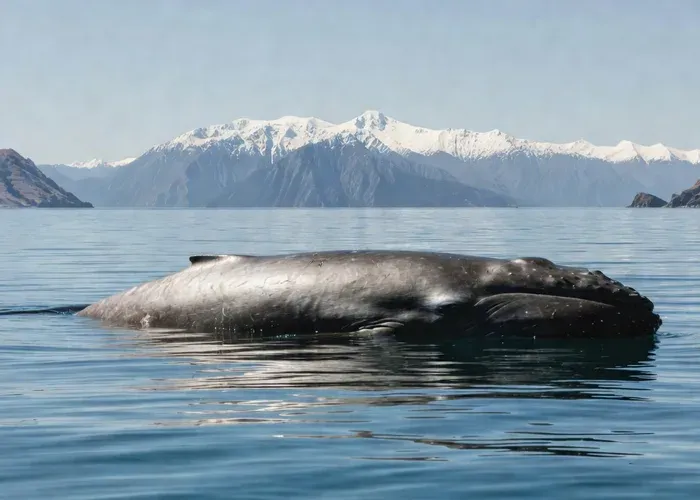
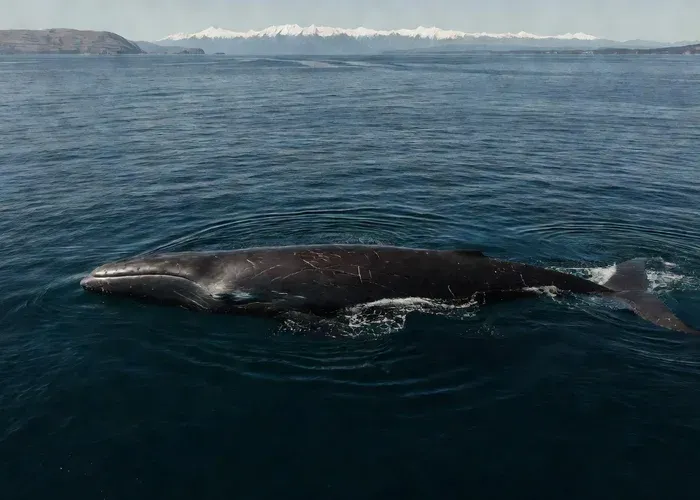
Sperm whales surface with a distinctive angled blow — pointing forward-left due to the offset blowhole. They rest at the surface for 8–12 minutes, breathing slowly before the next deep dive. The approach is to a respectful 50-metre minimum distance (NZ Marine Mammals Protection Regulations). At 15–18 metres, the animal's scale is overwhelming at water level. Most trips encounter 1–3 individual sperm whales.
The fluking dive
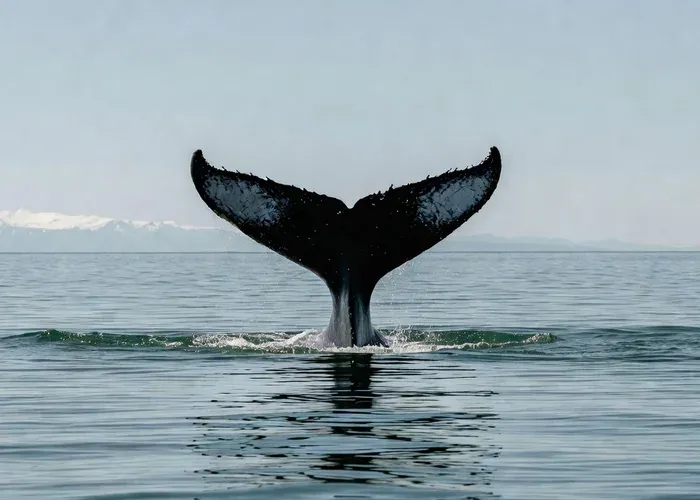
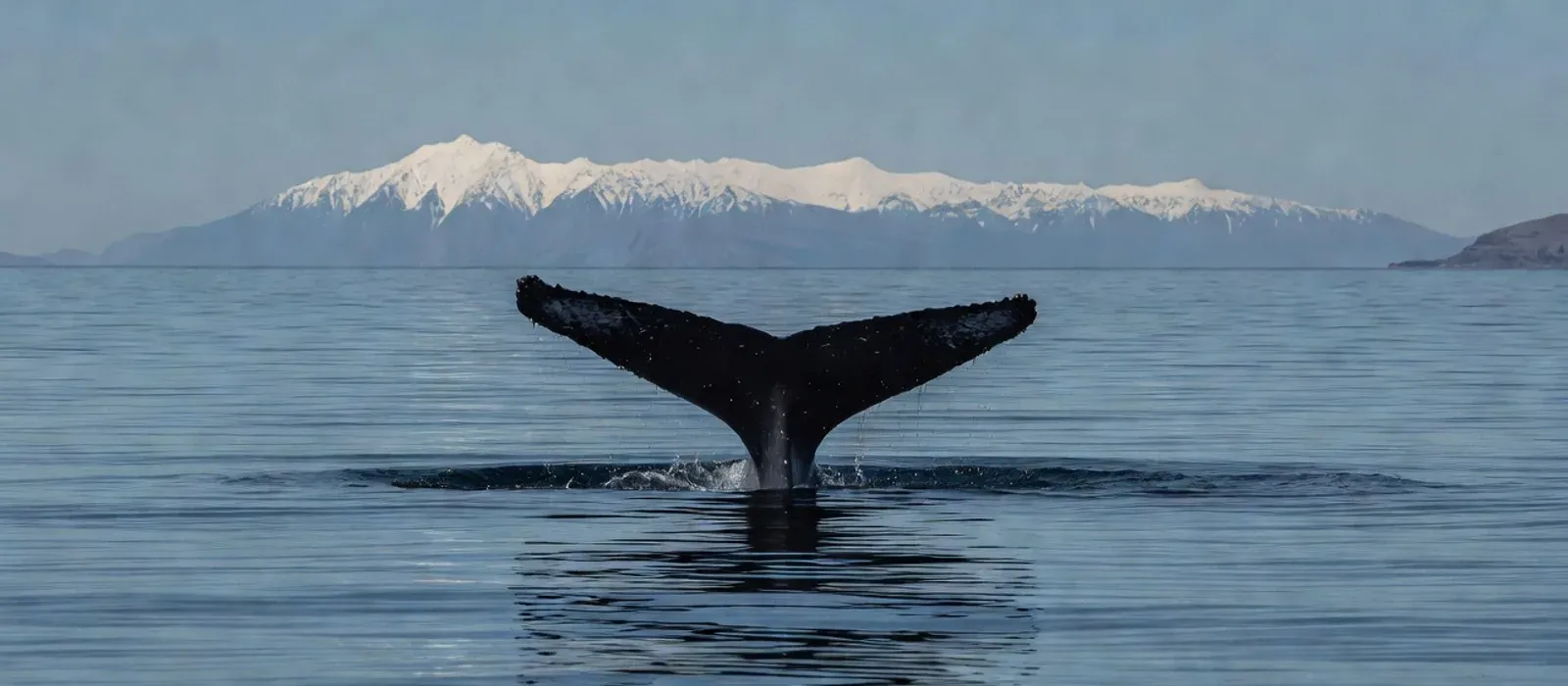
When ready to dive, the sperm whale arches its back and slowly raises its enormous broad flukes out of the water. The crew warns 'fluking in 30 seconds'. The fluke rises vertically for approximately 20 seconds before the whale descends, leaving a flat 'fluke print' on the surface — a calm circle of water where the tail was. This is the single most photographed moment in New Zealand wildlife tourism. Have your camera ready.
Dusky dolphins and return
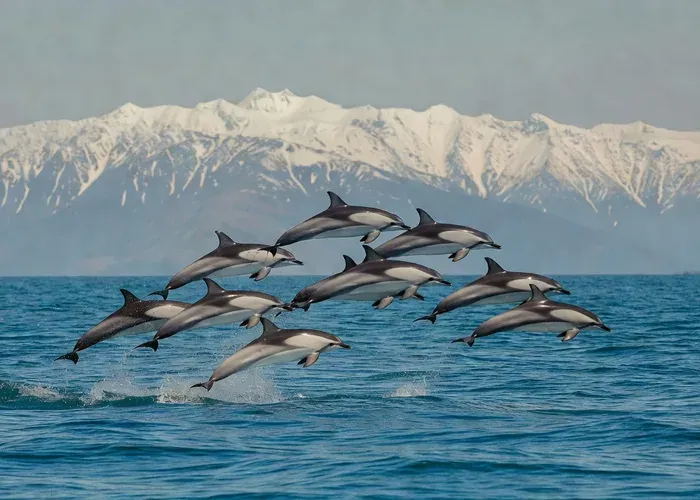
Dusky dolphins — sometimes in pods of hundreds — regularly encounter the boat. They bow-ride, leap, and spin alongside the vessel. On the return to harbour, the boat often passes close to the Point Kean fur seal colony. Most guests stop for lunch in Kaikōura town after the tour — the local crayfish (Kaikōura means 'meal of crayfish' in Māori) is the town's other famous attraction.
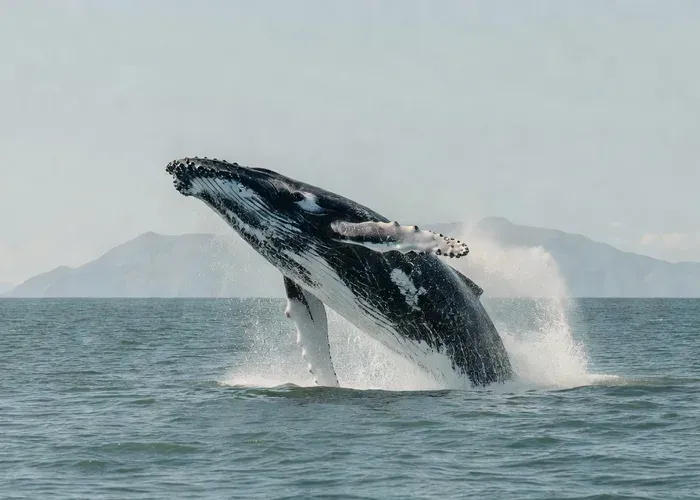
Watch: Humpback Whales in Kaikōura
Whale Watching in Kaikoura | Sperm Whale via Hydrophone
What to Bring — and What to Leave at Home
✓ Bring
- Sea sickness medication — strongly recommended even for guests who don't usually suffer
- Warm windproof jacket — cold at sea even in summer
- Sunscreen and sunglasses
- Camera with long zoom for sperm whale photography
- Light snack — boat trip is 2.5–3 hours
✗ Leave at home
- Cotton clothing — too cold when wet at sea
- Drones (illegal near cetaceans in New Zealand)
- Large luggage — stow at your accommodation
Where Tours Depart From
| Port / Area | Details |
|---|---|
| Whale Watch Kaikōura Terminal | Whaleway Station Rd, Kaikōura 7300, New Zealand. Main departure point for the boat cruise (t1). Free parking on site. Free shuttle from Kaikōura town centre (2 km). Check-in required 30 minutes before departure. Whale Watch runs 3–4 departures daily in season. |
| Kaikōura Aerodrome | South Bay, Kaikōura 7300. Departure point for scenic flights (t2, t4) and helicopter tour (t6). Located near South Bay, 2 km south of Kaikōura town. Free transfers available from the Whale Watch terminal or town centre. Small car park on site. |
| Christchurch City Centre (day tours t3, t5) | Central Christchurch hotel pickup. Tours t3 and t5 collect passengers from Christchurch hotels in the morning. The drive north to Kaikōura takes approximately 2 hours via State Highway 1 through Banks Peninsula and the spectacular Kaikōura coast. Exact pickup location confirmed in booking documentation. |
How to Choose an Ethical Tour
What ethical operators do
- Book Whale Watch Kaikōura — the Ngāi Tahu–owned operator with the strongest conservation credentials in New Zealand
- Maintain 50-metre minimum from all cetaceans (NZ Marine Mammals Protection Regulations)
- Do not use drones near cetaceans — illegal under NZ law
- Report whale entanglement immediately to DOC (0800 DOC HOT)
Red flags to avoid
- Swimming within 50 metres of whales or dolphins (illegal under NZ law)
- Using drones within 150m of cetaceans (illegal, $100,000 fine)
- Feeding or approaching fur seals at Point Kean — they bite