
Which Samaná Whale Watching Tour Is Right for You?
| Tour | Duration | Departs from | Best for | Rating | From | |
|---|---|---|---|---|---|---|
| Bay of Samaná Experience | 3 hours | Samaná town | Pure whale watching at the lowest price | 4.5★ | $65 | Check → |
| Full Day + Cayo Levantado | Full day (8–10 hrs) | Samaná town | Best overall value — whales + Bacardi Island beach | 4.7★ | $77 | Check → |
| Humpback Watching — Small Group | ~3–4 hours | Samaná town | Intimate small-group experience | 5.0★ | $78 | Check → |
| Day Trip from Punta Cana | Full day (10–12 hrs) | Punta Cana hotels | Visitors at Punta Cana or Bávaro resorts | 4.1★ | $111 | Check → |
| Full Day from Uvero Alto | Full day (10–12 hrs) | Uvero Alto / Miches area | Visitors at far-east resort area | 4.0★ | $155 | Check → |
Whale Species & Best Months in Samaná
| Species | January–March | April–June | July–September | October–December | Likelihood |
|---|---|---|---|---|---|
| Humpback Whale | Peak | — | — | — | ~98% Jan–Mar |
| Humpback Calf | Common | — | — | — | ~70% Feb–Mar |
| Humpback (singing) | Peak | — | — | — | Males sing Jan–Mar |
| Bottlenose Dolphin | Occasional | Occasional | Occasional | Occasional | Occasional year-round |
What to Expect on the Day
Departure from Samaná waterfront
Tours depart from the main dock in Santa Bárbara de Samaná — the small city on the south coast of the bay. The town's Malecón (seafront promenade) runs along the harbour. Tours typically depart at 9:00 AM. The bay is calm in the morning with tropical light ideal for photography. On arrival at the dock, guides brief the group on Dominican Republic whale watching regulations and what to expect.
Into the Bay of Samaná
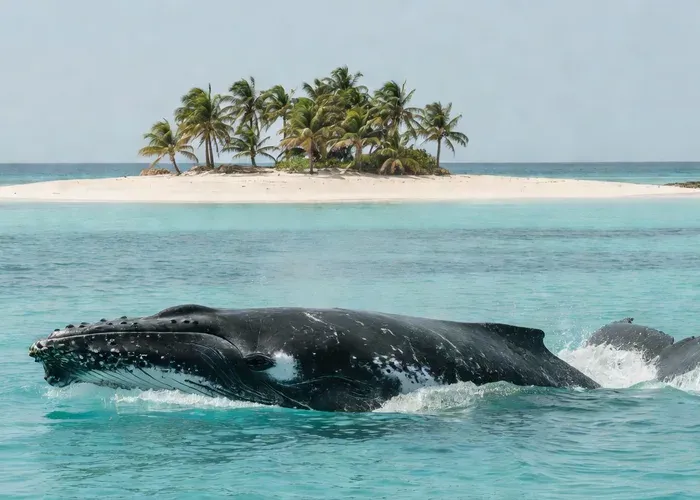
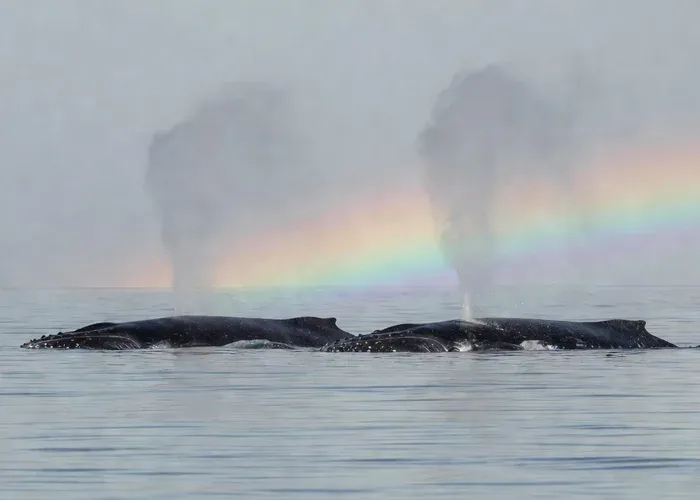
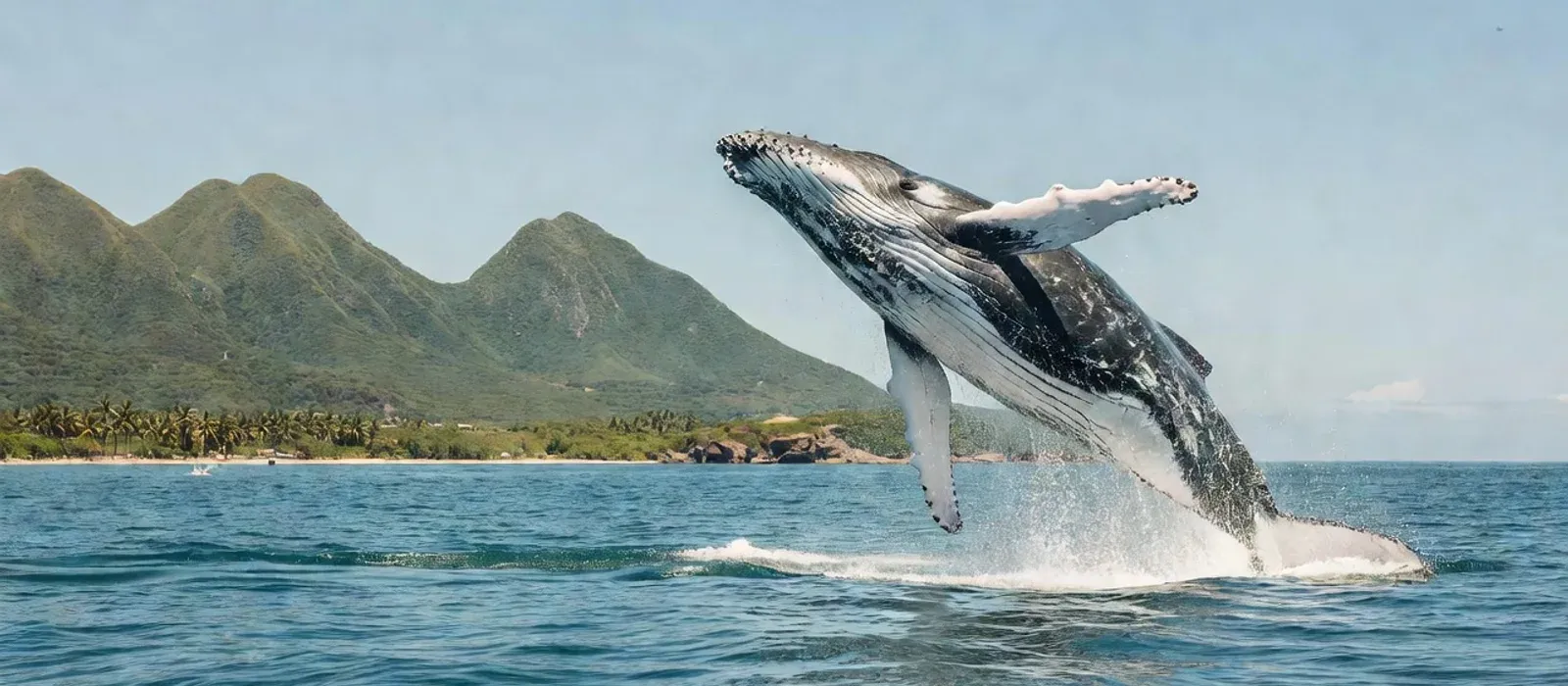
The bay is approximately 50 km long and 10 km wide — relatively shallow compared to open Atlantic waters, with the warm temperatures humpbacks need for breeding. The mountains of the Samaná Peninsula rise directly above the bay on the north side. Within 15–30 minutes of departure, guides spot whale activity — blows, breaches, or pec slaps visible from a distance. The bay is often crowded with small whale watching boats in February — all authorised by the government.
Humpback breeding behaviour
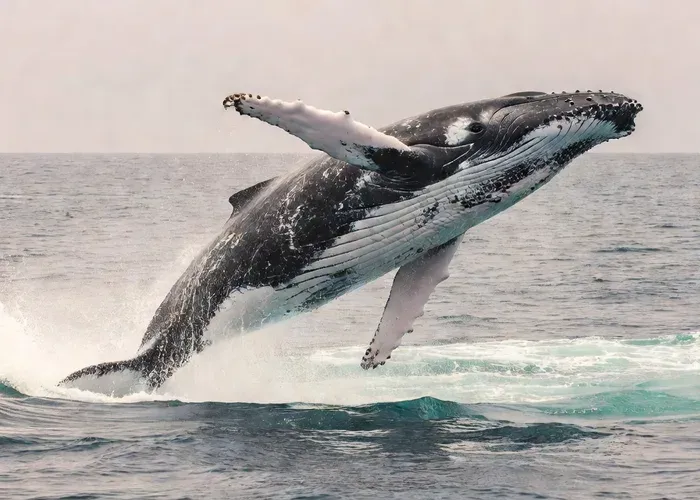
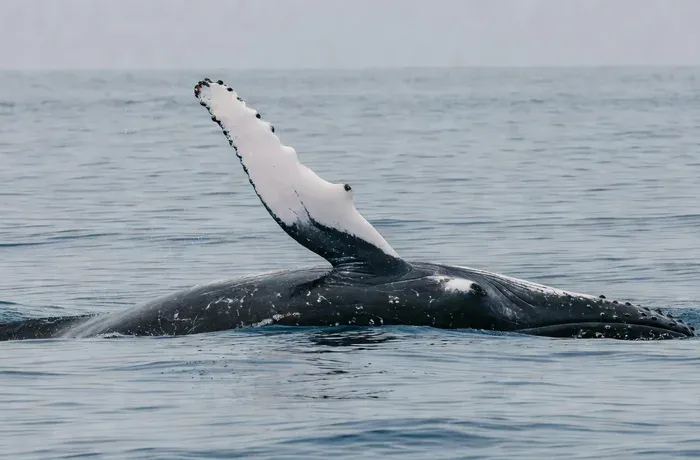
What makes Samaná different from other whale watching locations is the breeding context. Competitive groups — a female pursued by multiple males — produce high-energy surface activity: tail lobbing, pec slapping, chin breaching, and aggressive lunging between males. Mother-calf pairs rest quietly at the surface with the calf surfacing every few minutes to breathe, sometimes coming very close to the boat. Male singers typically stay submerged for 20–40 minutes, visible only when they briefly surface. The guide may deploy a hydrophone to let passengers hear the song underwater.
Visit to Cayo Levantado (full-day tours)
Cayo Levantado — Bacardi Island — is a 20-minute boat ride from the whale watching area. The island is a private beach resort with a sand bar, coconut palms, and a restaurant serving fresh seafood and Dominican food. Snorkelling equipment is available for rent. The combination of whale watching in the morning and Caribbean beach in the afternoon makes this one of the best-value days in the Dominican Republic.
El Limón Waterfall (Punta Cana tours only)
The t3 tour from Punta Cana includes a visit to Cascada El Limón — a 40-metre waterfall in the Samaná Peninsula rainforest, reached by a 30-minute horse ride or hike. The falls are at the end of a jungle trail and are one of the most photogenic natural features in the Dominican Republic. The total day covers whale watching, Caribbean beach, and jungle waterfall — three very different environments in one departure.
Watch: Humpback Whales in Samaná
Samaná Bay Whale Watching — Dominican Republic
What to Bring — and What to Leave at Home
✓ Bring
- Sunscreen SPF 50+ — Dominican Republic sun is intense year-round
- Light layers or a windbreaker for the boat
- Swimwear if combining with Cayo Levantado beach visit
- Camera with zoom
- Cash in Dominican pesos or USD for food and drinks on Cayo Levantado
✗ Leave at home
- Winter clothing — January–March in Samaná is warm and sunny (24–28°C)
- Pets
Where Tours Depart From
| Port / Area | Details |
|---|---|
| Santa Bárbara de Samaná Harbour | Calle Santa Bárbara, Santa Bárbara de Samaná 32000, Dominican Republic. Main departure point for tours t1, t2, and t4. The harbour is on the south coast of the bay. Buses and minibuses (guaguas) from Las Terrenas to Samaná town take 45 minutes. Taxis from Las Terrenas: 30–40 minutes. |
| Punta Cana (pickup from hotel) | Tours t3 collects passengers from Punta Cana hotels. Punta Cana International Airport (PUJ) is the main gateway. Drive from Punta Cana to Samaná: approximately 2.5–3 hours via the Samana–Punta Cana corridor. Pickup times vary by hotel location — confirmed in booking documentation. |
| Uvero Alto Resort Area | Tour t5 picks up from Uvero Alto, the easternmost resort area of the Dominican Republic (also known as Miches area). Approximately 3 hours from Samaná by road. The furthest departure point from the bay, but convenient for guests at the few large resorts in this area. |
How to Choose an Ethical Tour
What ethical operators do
- All whale watching in Samaná Bay is governed by Dominican Republic Decree 571-09 — mandatory permits, authorised operators only
- Maximum approach distance: 15 metres from any humpback; no chasing or circling
- Choose operators affiliated with CIBAEA (Centre for Investigation of Samaná Bay Ecosystems)
- Do not swim with or attempt to touch humpbacks — swimming with whales requires Silver Bank permits
Red flags to avoid
- Swimming within 15 metres of humpbacks without a Silver Bank research permit (illegal under Dominican law)
- Non-authorised operators — only licensed boats are permitted in the whale watching zone
- Drone use near whales — prohibited in the Bay of Samaná sanctuary