Which Sri Lanka Whale Watching Tour Is Right for You?
| Tour type | Duration | Group size | Best for | Rating | From | |
|---|---|---|---|---|---|---|
| Mirissa South Coast — Shared Boats | 3–5 hrs | 10–30 | Budget travellers, solo backpackers | 4.1 | $20 | Check → |
| Mirissa — Premium and Combo Tours | 4–6 hrs | 8–20 | Travellers wanting activities beyond whale watching | 4.9 | $69 | Check → |
| Mirissa — Private Yacht and Luxury Sailing | 5–8 hrs | 2–10 | Couples, honeymoons, small private groups | 4.5 | $225 | Check → |
| Galle and Hikkaduwa South Coast | 4–7 hrs | 10–25 | Travellers staying in Galle or Hikkaduwa | 4.3 | $120 | Check → |
| Trincomalee East Coast | 4–6 hrs | 10–25 | June–September visitors, east coast travellers | 4.3 | $25 | Check → |
| Kalpitiya and Ahangama — Specialist Departures | 4–6 hrs | 4–15 | Off-the-beaten-path travellers, northwest coast visitors | 4.5 | $110 | Check → |
Whale Species & Best Months in Sri Lanka
| Species | January–March | April–June | July–September | October–December | Likelihood |
|---|---|---|---|---|---|
| Blue Whale | Peak | Common | Peak (east) | Present | Year-round across both coasts |
| Sperm Whale | Common | Occasional | Common | Occasional | South coast Nov–Apr, east coast Jun–Sep |
| Fin Whale | Occasional | Rare | Occasional | Rare | Irregular sightings |
| Bryde's Whale | Occasional | Occasional | Occasional | Occasional | Year-round, deeper water |
| Spinner Dolphin | Common | Common | Common | Common | Year-round, both coasts |
| Bottlenose Dolphin | Common | Common | Common | Common | Year-round, both coasts |
What to Expect on the Day
Early departure from Mirissa Harbour (5:30–6:00 AM)
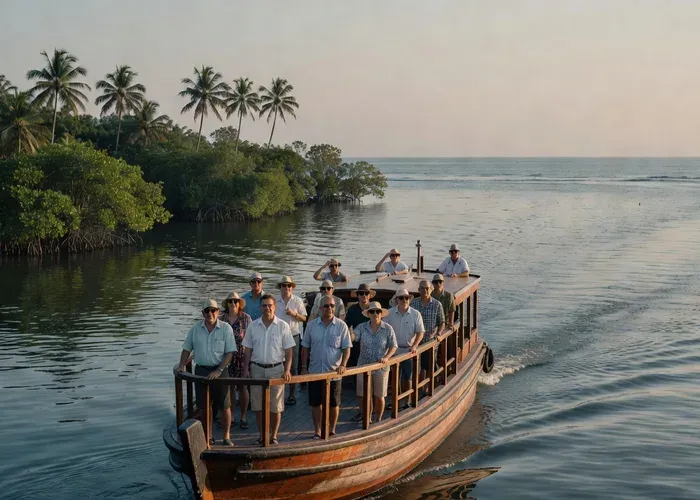
All south coast tours depart very early — blue whales are most active and the seas are flattest in the early morning before the trade wind builds. Mirissa Fishing Harbour is a small working harbour at the base of a beach; the boats depart before sunrise. Check-in is typically 30 minutes before departure. For the first-timers: this early departure is worth it — the flat glass-calm sea at 6 AM makes the experience completely different from an afternoon departure.
20–40 minutes offshore to the feeding grounds
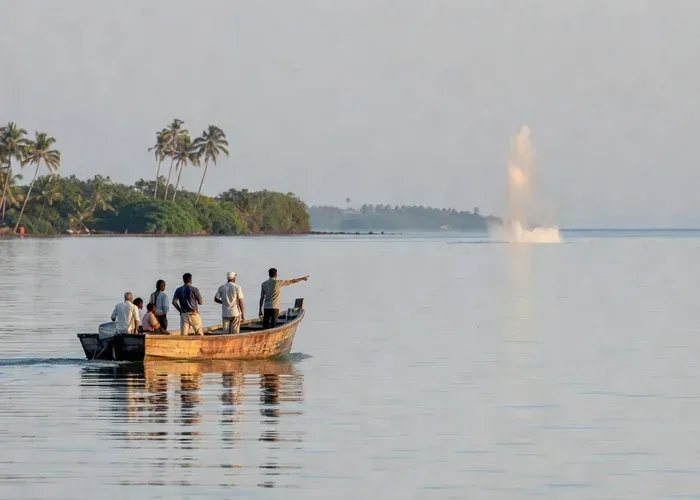
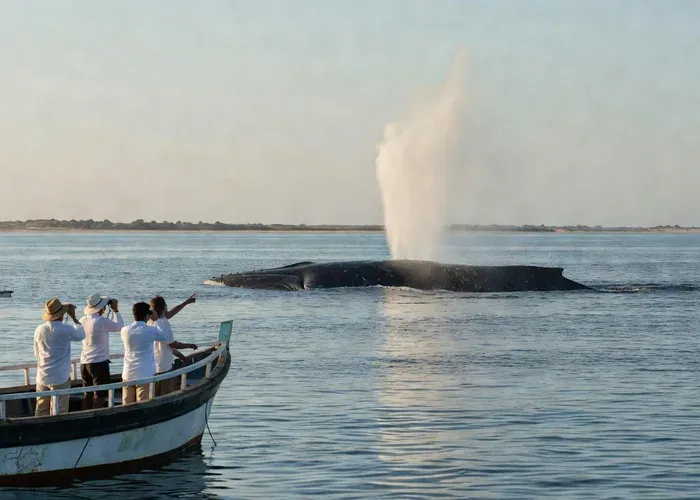
The blue whale feeding area off Mirissa sits in a deep-water canyon 20–30 km offshore where the Indian Ocean floor drops steeply. The passage offshore takes 20–40 minutes depending on sea conditions and the operator. The first blue whale blow is usually visible at extreme distance before the boat arrives — a white column of condensed blow rising 8–10 metres, visible against the horizon from over 2 km away. At Trincomalee, the whales are found further out — 1–2 hours offshore in the deeper Bay of Bengal channel.
Blue whale encounter
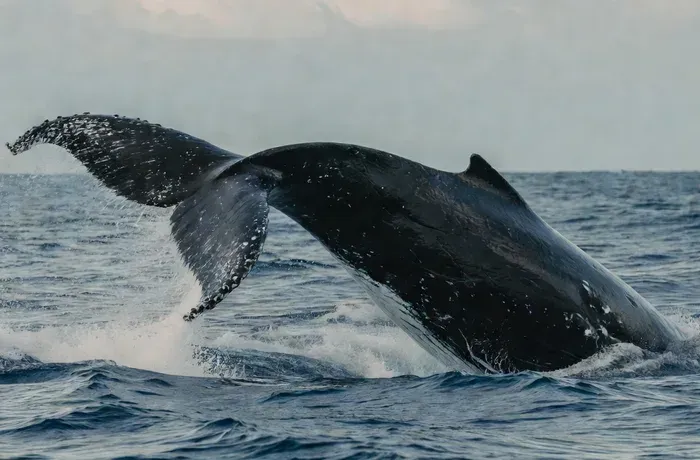
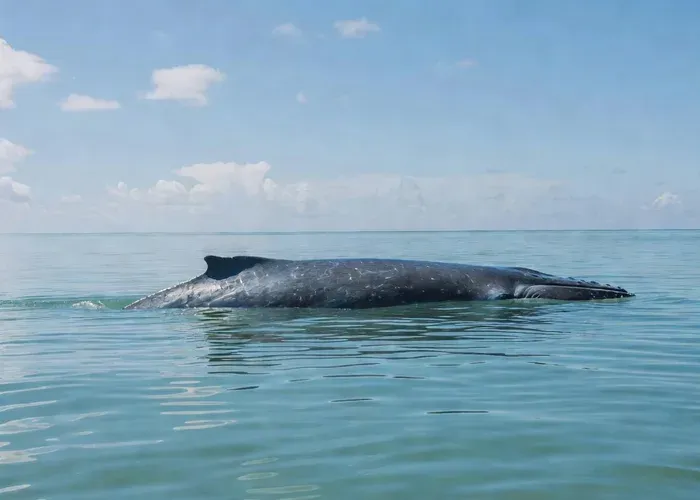
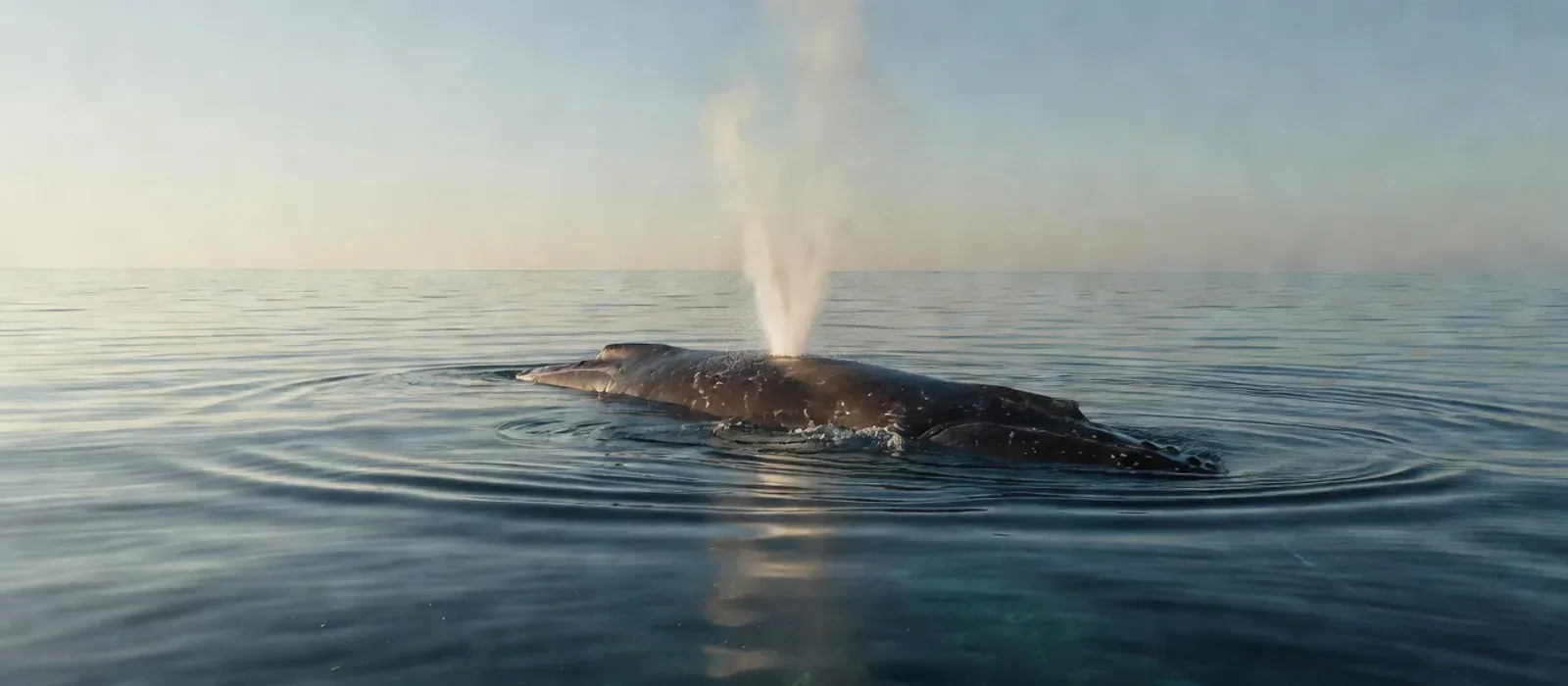
Blue whales at Mirissa and Trincomalee are resident feeders, not shy transients — they surface regularly in the same area and are accustomed to respectful boat presence. A typical encounter: the boat slows 100–300 metres from the whale, the guide identifies the individual from the mottled flank pattern, and the group watches multiple surfacing cycles (3–8 breaths, 10–15 minutes apart) before a long dive. The blow — up to 9 metres tall and audible — is usually the first sighting. Flukes are not always raised at Mirissa: blue whales here typically show the back and tiny dorsal fin, then slide under. Occasionally a fluke-up dive or a partial breach occurs.
Dolphins and other sightings
Spinner dolphins are extremely common in Sri Lankan waters — most tours encounter large pods (50–500 individuals) travelling at high speed, leaping acrobatically. Bottlenose dolphins are also resident. On approximately 30–40 percent of trips, sperm whales are also sighted — identifiable by the angled blow to the left and wrinkled dark skin. The combination of blue whale + sperm whale + dolphins in a single morning is one of Sri Lanka's signature wildlife experiences.
Return and breakfast / post-tour
Most standard Mirissa tours return by 10–11 AM, leaving the rest of the day free. Many operators offer breakfast on board (some included, some extra — check before booking). The Coconut Hill tour (t7) adds a post-whale-watching hike to the Mirissa viewpoint above the harbour. The turtle snorkeling combo (t1) adds a separate snorkeling stop on return for an additional 30–45 minutes in the water.
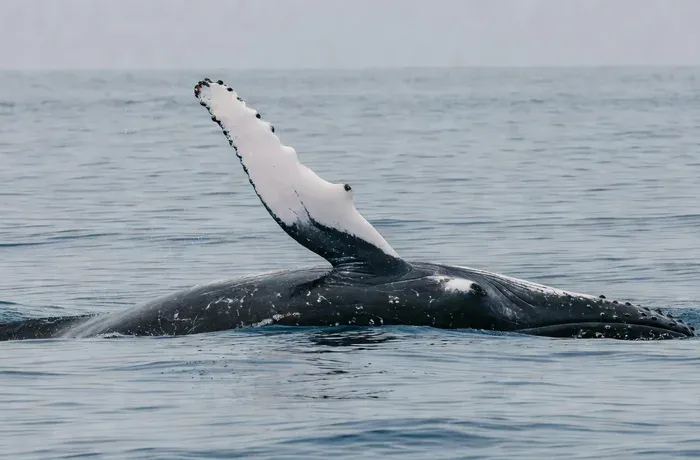
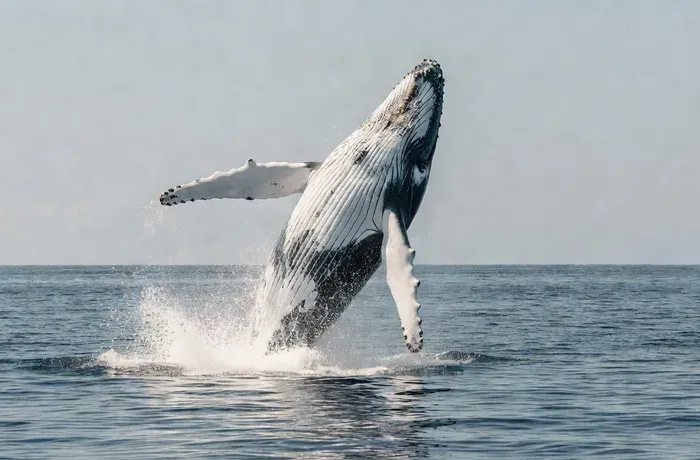
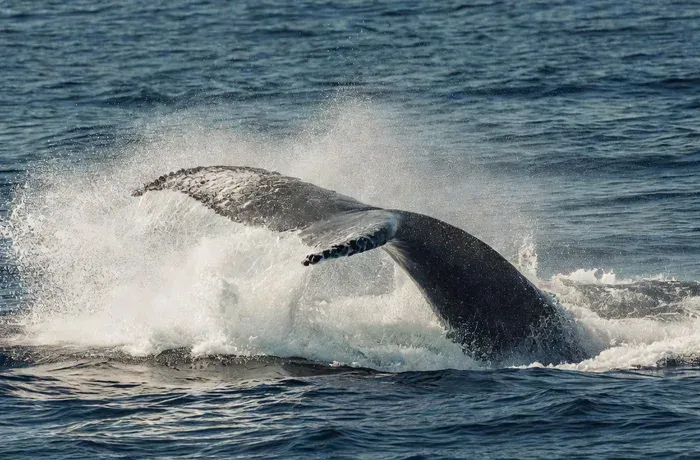
Watch: Humpback Whales in Sri Lanka
Whale Watching in Sri Lanka — We Saw a Blue Whale!
What to Bring — and What to Leave at Home
✓ Bring
- Light, quick-dry clothing — tropical heat even on the water at 5–6° N latitude
- Sunscreen SPF 50+ and sunglasses — intense equatorial sun reflects off flat Indian Ocean
- Seasickness medication if sensitive — ocean swells can build when wind picks up
- Waterproof bag or dry bag for phone, camera, and documents
- Binoculars if possible — blue whale blows are visible up to 2 km before the boat arrives
✗ Leave at home
- Food or strong-smelling items on shared budget boats — space is limited
- Valuables you cannot afford to get wet — spray is inevitable on small boats
Where Tours Depart From
| Port / Area | Details |
|---|---|
| Mirissa Fishing Harbour, Southern Province | Mirissa Harbour, Mirissa, Matara District, Southern Province 81740, Sri Lanka. GPS: 5.9485° N, 80.4503° E. The main whale watching departure point. 30 km east of Galle, 155 km south of Colombo (2.5–3 hours by road or train). Tuk-tuks, taxis, and guesthouses in Mirissa village are within walking distance of the harbour. Mirissa has abundant beach accommodation from backpacker guesthouses to boutique hotels. |
| Galle City, Southern Province | Galle, Southern Province, Sri Lanka. 30 km west of Mirissa. Sri Lanka's most visited heritage city (Dutch colonial fort, UNESCO World Heritage site). Some Galle-based operators drive clients to Mirissa to join the main fleet; others have their own boats at the Galle Fisheries Harbour. An excellent base for travellers wanting to combine whale watching with cultural sightseeing. |
| Hikkaduwa, Southern Province | Hikkaduwa, Galle District, Southern Province. 18 km west of Galle, 45 km west of Mirissa. Popular surf and dive resort town with good reef snorkeling. Whale watching boats here travel further to reach the offshore feeding grounds but cover the same whales. Best combined with reef snorkeling or surf lessons. |
| Trincomalee, Eastern Province | Trincomalee (locally known as Trinco), Eastern Province, Sri Lanka. GPS: 8.5874° N, 81.2152° E. Sri Lanka's east coast hub for June–September whale watching. Natural deep harbour (one of the world's largest) opening to the Bay of Bengal. 3.5 hours by road from Colombo, or fly into Trincomalee Civilian Airport (TRR). Good beach accommodation in Nilaveli (20 km north) and Uppuveli. |
| Kalpitiya, North Western Province | Kalpitiya, Puttalam District, North Western Province, Sri Lanka. GPS: 8.2325° N, 79.7339° E. Remote lagoon destination on Sri Lanka's northwest coast. Famous for dolphin encounters year-round and occasional blue whale sightings offshore. 3 hours north of Colombo. Much less tourist infrastructure than the south coast — bring what you need. |
| Ahangama, Southern Province | Ahangama, Galle District, Southern Province. 8 km east of Hikkaduwa, 20 km west of Mirissa. Small fishing village popular with surfers. Shared whale watching boats here offer similar experiences to Mirissa at comparable prices — good for travellers staying in the Ahangama–Weligama area. |
How to Choose an Ethical Tour
What ethical operators do
- Maintain 100-metre minimum distance from blue whales — their feeding behaviour requires undisturbed surfacing cycles
- Follow the 'no wake, engine idle' protocol operators use when alongside a whale — noise disturbs their echolocation
- Choose operators with fixed group sizes (maximum 20 passengers) — smaller groups mean less boat noise and more respectful encounters
- Check reviews specifically for operator behaviour around whales, not just sighting rates — some Mirissa operators approach too closely
Red flags to avoid
- Swimming in the water near blue whales — prohibited on all responsible tours, dangerous at this scale of animal
- Flash photography — disruptive, especially when whales are calm and logging
- Operators who chase whales, rev engines near animals, or allow passengers to dangle legs over the side near whales — avoid these operators