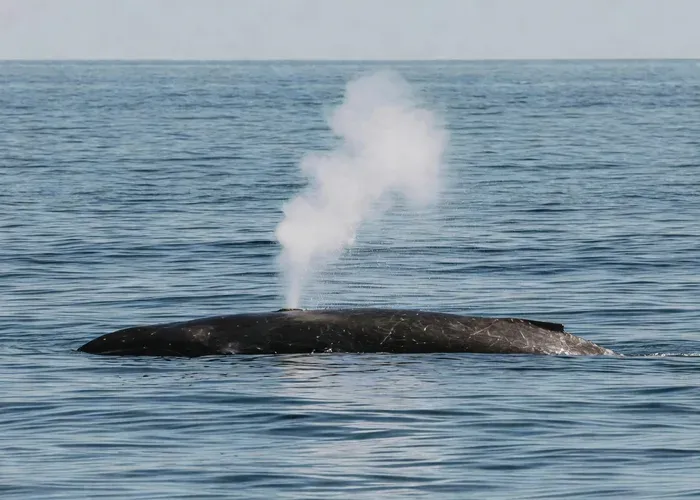
Which Tenerife Whale Watching Tour Is Right for You?
| Tour type | Duration | Group size | Best for | Rating | From | |
|---|---|---|---|---|---|---|
| Eco-Yacht with Swim | 2–3 hrs | Small group | First-timers seeking proven quality | 4.6 | €29 | Check → |
| No-Chase Ethical Cruise | 2–3 hrs | Small group | Conservation-conscious travellers on a budget | 4.6 | €23 | Check → |
| Los Gigantes Cliffs Cruise | 2–3 hrs | Small group | Travellers who want the most spectacular scenery | 4.7 | €33 | Check → |
| Luxury Cruise with Food & Drinks | 2–3 hrs | Small group | Couples or travellers wanting a relaxed premium experience | 4.6 | $87 | Check → |
| Private Luxury Yacht | 3 hrs | Up to 11 (private) | Groups, families, or couples wanting complete privacy | 4.9 | $687/group | Check → |
Whale Species & Best Months in Tenerife
| Species | January–March | April–June | July–September | October–December | Likelihood |
|---|---|---|---|---|---|
| Short-finned Pilot Whale | Resident | Resident | Resident | Resident | ~95% year-round |
| Bottlenose Dolphin | Resident | Resident | Resident | Resident | Very High |
| Common Dolphin | Common | Common | Common | Common | High |
| Fin Whale | Occasional | Occasional | — | Occasional | ~15% |
| Sperm Whale | Rare | Rare | Rare | Rare | ~5% |
What to Expect on the Day
Depart Los Cristianos, Puerto Colón, or Los Gigantes
Tenerife has three active whale watching ports. Los Cristianos is the main tourist harbour in the south, most accessible from the hotel zones of Playa de las Américas and Costa Adeje. Puerto Colón (Costa Adeje) is the marina walkable from most Costa Adeje hotels. Los Gigantes harbour is on the island's dramatic west coast directly beneath the volcanic cliffs — 40 minutes by car from Los Cristianos. Your booking confirmation specifies the exact port.
Into the Strait of Tenerife
The first few minutes out of port place the boat above the submarine canyon — a 1,000-metre deep channel between Tenerife and La Gomera. This canyon is the resident pilot whales' home territory. The island of La Gomera appears ahead (28 km away), with the green volcanic cone of Garajonay National Park visible above the cloud line. Pilot whale pods are often located within 15–20 minutes of departure.
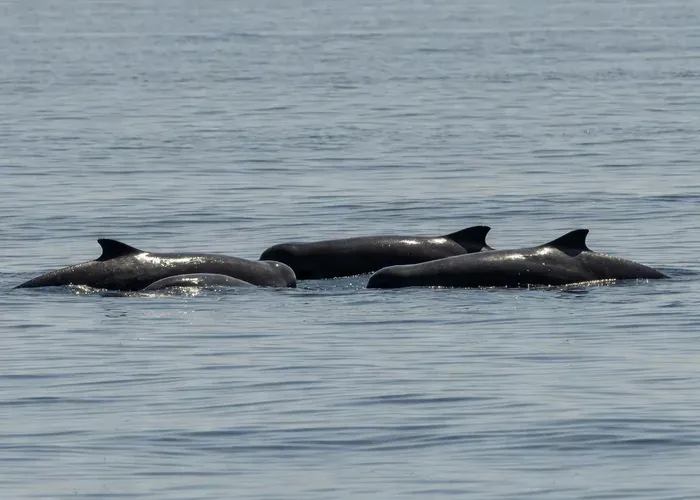
Pilot whale pods
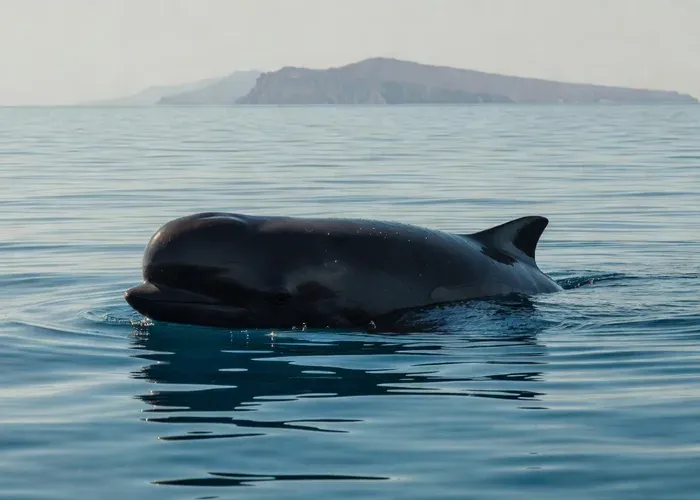
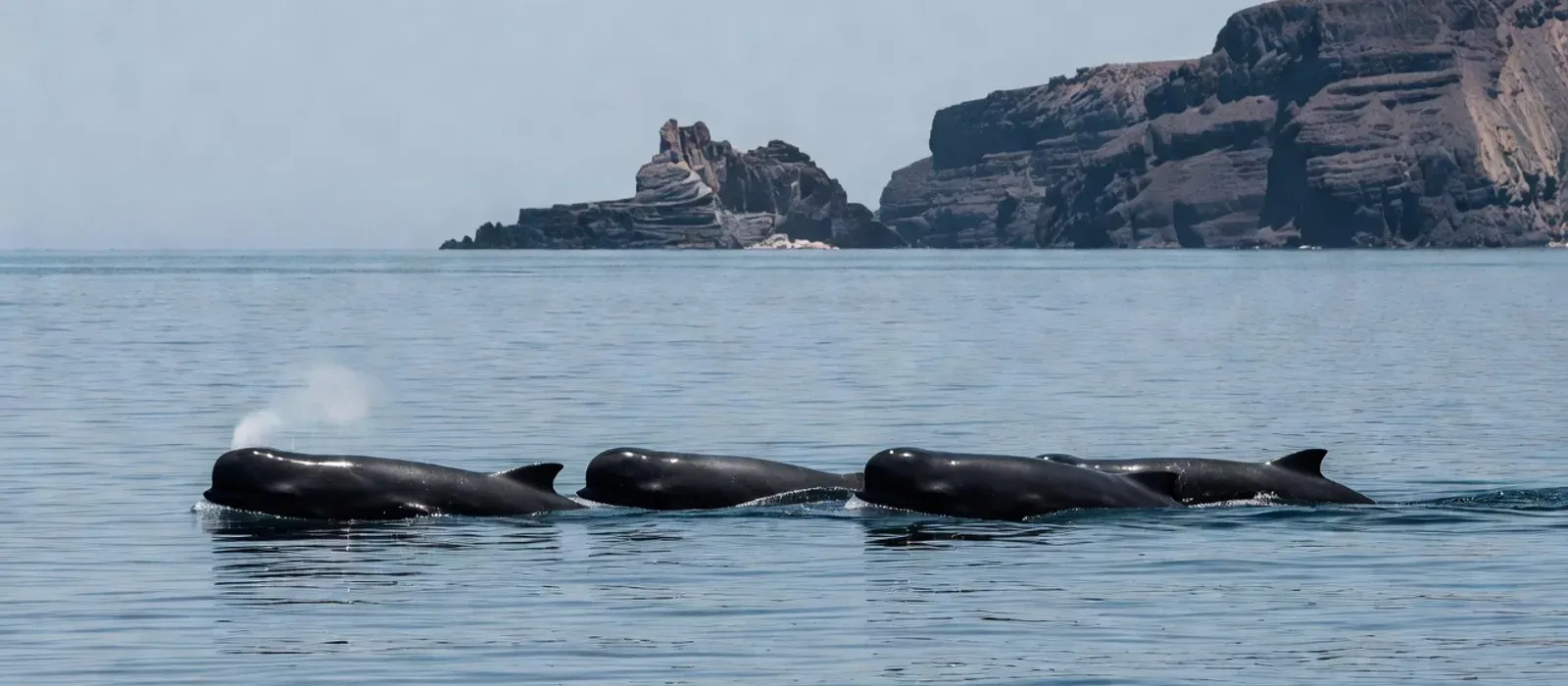
Short-finned pilot whales live in tight social pods of 10–30 animals. They are distinctive at the surface: dark grey-black bodies, rounded foreheads (the melon), and a curved dorsal fin. Pilot whales are slower and more approachable than most whale species — boats can idle alongside a resting pod for 10–15 minutes. Calves surface close to their mothers. Adult males are noticeably larger and thicker-set than females.
Dolphin encounters
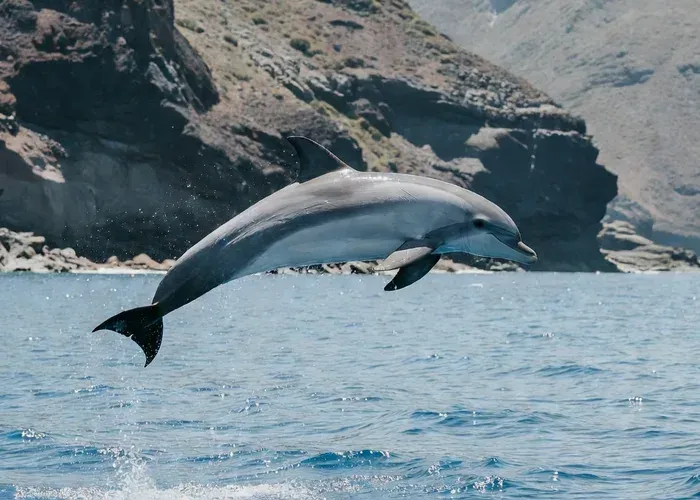
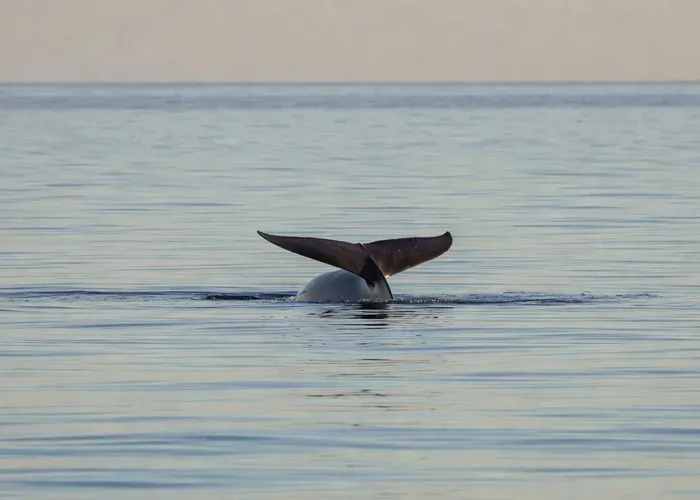
Bottlenose dolphins are frequently encountered in the same channel as the pilot whales. Pods of 20–100 animals are common. Common dolphins and Atlantic spotted dolphins also appear regularly. Dolphins often bow-ride the boat at speed — the same pod may stay with the vessel for 10–20 minutes. Fin whales appear as distant spouts (much taller than pilot whale blows) on occasional departures, especially in spring and autumn.
Swim stop in the Atlantic
Most Tenerife tours include a scheduled swim stop — the boat anchors in calm water and passengers swim in the open Atlantic. Water temperature ranges from 18°C in February to 24°C in August. The clarity is exceptional — visibility often exceeds 20 metres. The Los Gigantes tour's swim stop is beneath the volcanic cliffs — one of the most extraordinary swimming experiences in Europe.
Watch: Humpback Whales in Tenerife
Best of Tenerife Whale Watching: Atlantic Star Boat Trip
What to Bring — and What to Leave at Home
✓ Bring
- Swimwear — most tours include a swim stop in the Atlantic
- Reef-safe sunscreen SPF 50+ — Tenerife sun is intense even in winter
- Towel (unless your tour provides one — check the listing)
- Sunglasses
- Light layers for the morning departure before the sun is high
- Camera or waterproof phone case
✗ Leave at home
- Thick layers — Tenerife is warm year-round, even December
- Pets
Where Tours Depart From
| Port / Area | Details |
|---|---|
| Los Cristianos Harbour | Puerto de Los Cristianos, 38650 Los Cristianos, Tenerife. 10-minute walk from Los Cristianos beach and town centre. Taxis from Playa de las Américas hotels: 10 minutes. Buses from the main tourist zones run frequently to Los Cristianos. |
| Puerto Colón (Costa Adeje) | CC Puerto Colón, 38660 Costa Adeje, Tenerife. The main marina for Costa Adeje hotels — walkable from most Adeje hotel zone properties. Free parking at the marina. Largest port for whale watching departures in Tenerife. |
| Los Gigantes Harbour | Puerto de Los Gigantes, 38683 Santiago del Teide, Tenerife. 40 km northwest of Los Cristianos (45 minutes by car). Worth the drive for the cliffs backdrop. Free parking near the harbour. Buses connect Los Gigantes to the south tourist zones — journey time 60–90 minutes. |
How to Choose an Ethical Tour
What ethical operators do
- Choose operators with FIRMM certification or explicit no-chase policies
- Maintain quiet on the boat when approaching pilot whale pods
- Report unusual whale behaviour (beaching, entanglement) to SEPRONA (Spanish nature police) immediately
- The swim stop distance from whale pods is managed by the captain — do not swim toward any cetacean
Red flags to avoid
- Operators who rev engines or pursue retreating whale pods
- Feeding dolphins from the boat
- Swimming toward or approaching pilot whales independently during the swim stop