
Which Uvita Whale Watching Tour Is Right for You?
| Tour | Duration | Group size | Best for | Rating | From | |
|---|---|---|---|---|---|---|
| Whale & Dolphin with Drinks & Snacks | 2–3 hrs | Small–medium | First-timers, most-reviewed operator | 4.6 | $95 | Check → |
| Viator Whales and Dolphins Tour | 2–3 hrs | Small–medium | Viator bookers, alternative booking channel | — | $95 | Check → |
| Certified National Park Tour | 2–3 hrs | Small | Regulation-compliant experience | 4.6 | $95 | Check → |
| Expert Guides Adventure | 2–3 hrs | Small group | Wildlife enthusiasts, naturalist commentary | 4.7 | $96 | Check → |
| Cruise-Style Comfort Tour | 2–3 hrs | Medium–large | Families, elderly guests, those wanting comfort | 4.6 | $114 | Check → |
| Budget Bahia Ballena Tour | 2–3 hrs | Small–medium | Budget travellers, same park experience | 4.2 | $92 | Check → |
| Best Value National Park Tour | 2–3 hrs | Small–medium | Best value — low price, strong reviews | 4.6 | $92 | Check → |
| Premium Humpback Wildlife Experience | 2–3 hrs | Small | Serious wildlife observers, photographers | 4.2 | $133 | Check → |
Whale Species & Best Months in Uvita
| Species | January–March | April–June | July–September | October–December | Likelihood |
|---|---|---|---|---|---|
| Humpback (S. Hemisphere) | Occasional | — | Peak | Present | July–November |
| Humpback (N. Hemisphere) | Peak | Occasional | — | Occasional | December–April |
| Spinner Dolphin | Common | Common | Common | Common | Year-round |
| Bottlenose Dolphin | Common | Common | Common | Common | Year-round |
| Pantropical Spotted Dolphin | Occasional | Occasional | Occasional | Occasional | Occasional |
What to Expect on the Day
Departure from Playa Uvita
Tour boats launch directly from Playa Uvita beach within Marino Ballena National Park — a protected beach in the national park. Check-in is at the beach. A national park entrance fee (payable in cash, approximately $18 USD) is charged separately on arrival — most tours confirm whether this is included. The whale tail sand formation is visible from the beach at low tide before boarding.
The whale tail formation
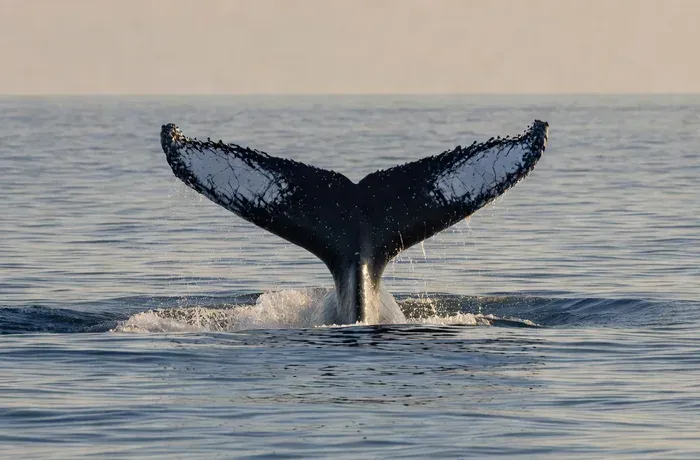
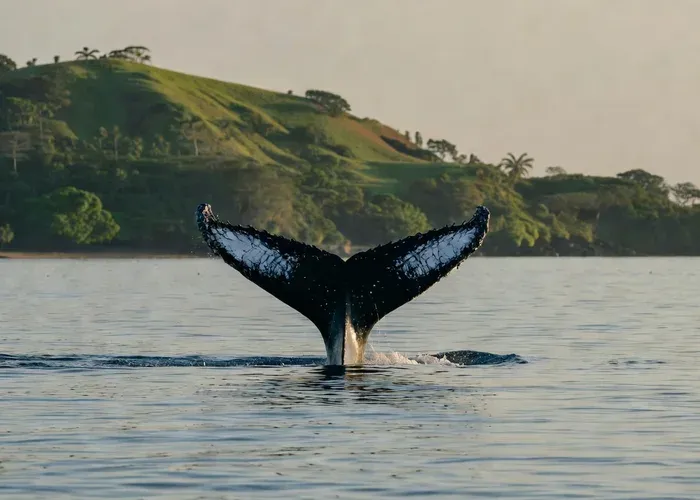
The sand spit extending from Uvita beach into the Pacific forms a perfect whale fluke silhouette at low tide — the feature the park was named for. This geological formation is created by opposing ocean currents depositing sand in a curved spit. If timing aligns with low tide, the boat passes alongside the formation as it clears the bay — one of the most photographed coastal formations in Central America.
Spinner dolphins in Bahía Ballena
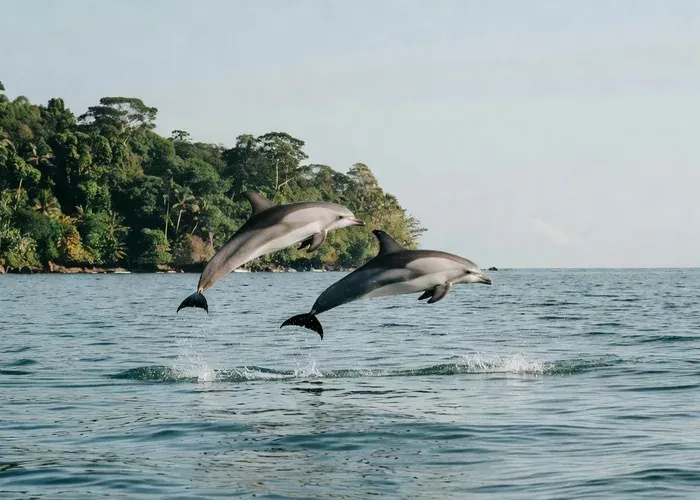
Spinner dolphins are almost always the first wildlife encountered — resident pods of 20–200 are present in the bay year-round. They frequently approach tour boats, bow-ride alongside, and perform the spinning leaps that give them their name. Pantropical spotted dolphins are also occasionally seen. This reliable dolphin activity makes Uvita tours consistently successful even when whales are at greater distance.
Humpback whale encounters
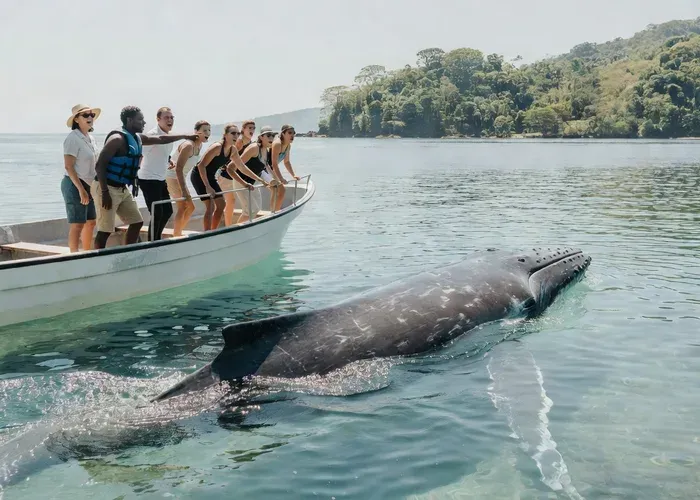
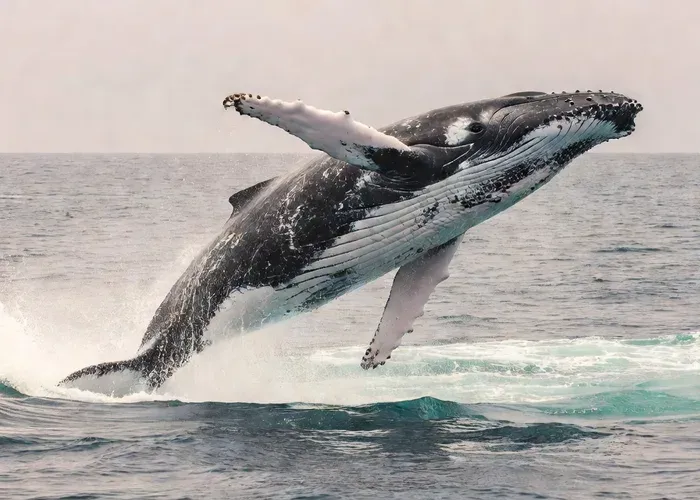
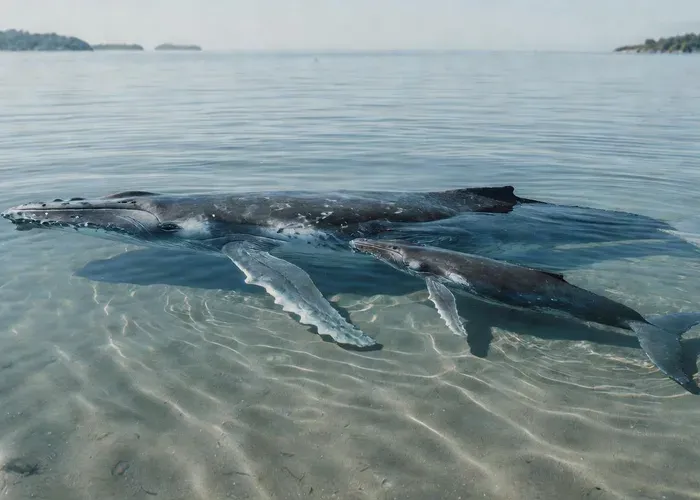
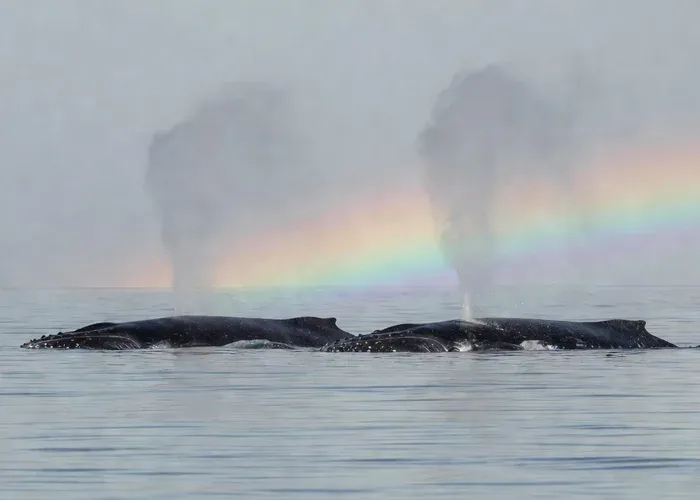
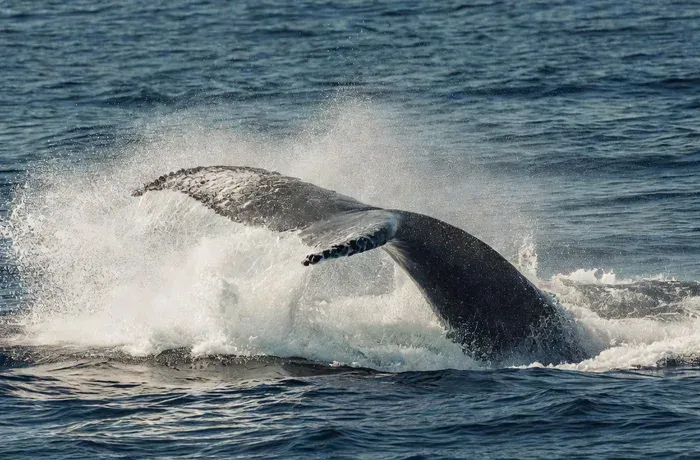
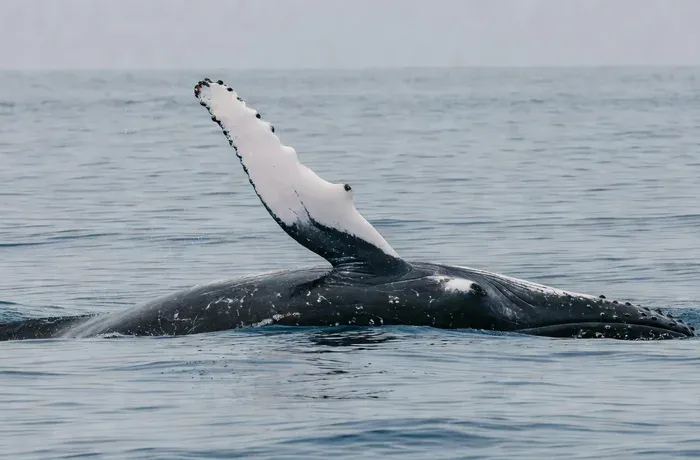
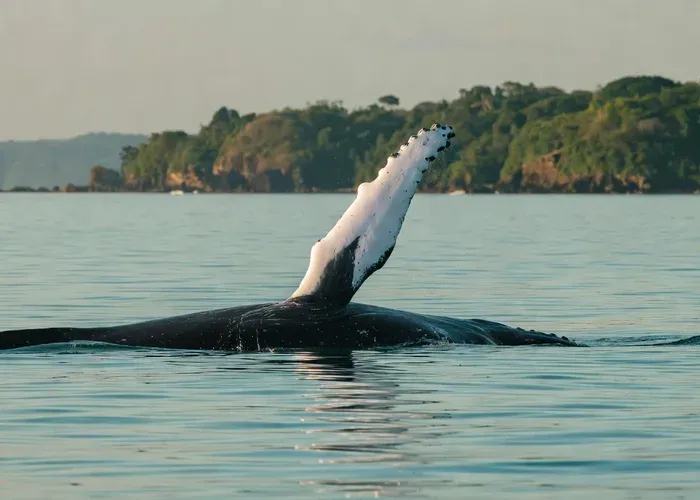
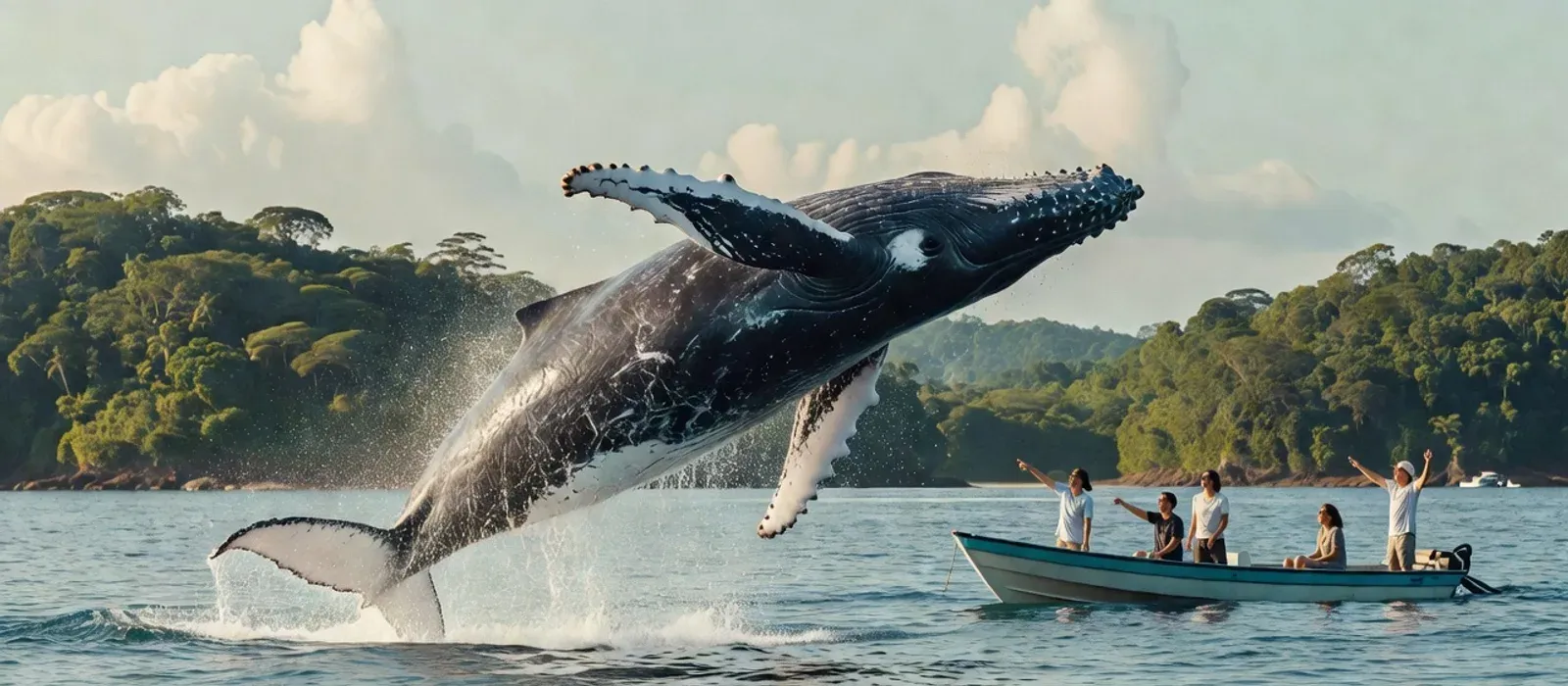
Humpbacks in Marino Ballena are in breeding mode during both seasons — males are singing and competing, females are nursing calves, and surface activity is high. Breaching, pec slapping, and tail lobbing are common. Mother-calf pairs sometimes remain stationary for extended periods, allowing extended observations. Costa Rica's whale watching regulations require operators to maintain a minimum 20-metre approach distance and limit time spent near any individual whale.
Return and snorkelling (selected tours)
Some tours include a snorkelling stop in the national park — coral formations, tropical fish, sea turtles, and manta rays are present in the park's waters. Other tours offer drinks, snacks, and time near the whale tail formation on the return. Check your specific tour inclusions at booking.
Watch: Humpback Whales in Uvita
Whale Watching Tour in Uvita, Costa Rica
What to Bring — and What to Leave at Home
✓ Bring
- Sunscreen SPF 50+ and a hat — Pacific Costa Rica sun is intense
- Swimwear and a light change of clothes — the boat can splash
- Waterproof bag for electronics
- Light jacket for early morning departures
- Cash for national park entrance fee (separate from tour price)
✗ Leave at home
- Heavy raingear — the tropics are warm even when wet
- Pets
- Expensive camera equipment without a waterproof case
Where Tours Depart From
| Port / Area | Details |
|---|---|
| Playa Uvita, Marino Ballena National Park | Uvita Beach, Osa, Costa Rica. All whale watching tours depart from Playa Uvita within the national park boundary. Access from the main coastal highway (Costanera Sur) — Uvita is approximately 170 km south of San José (3 hours by car) and 17 km south of Dominical. National park entrance fee payable at the beach. Limited free parking near the beach. |
How to Choose an Ethical Tour
What ethical operators do
- Maintain 20-metre minimum from cetaceans (Costa Rica MINAE regulations for Marino Ballena)
- Choose operators certified by SINAC (Sistema Nacional de Áreas de Conservación)
- Maximum 3 boats near any one whale at a time (Costa Rica national park rule)
- Pay the national park entrance fee — it directly funds marine conservation
Red flags to avoid
- Operators who approach closer than permitted or circle whales
- Entering the water within 50 metres of any cetacean
- Touching or feeding dolphins — illegal within the national park