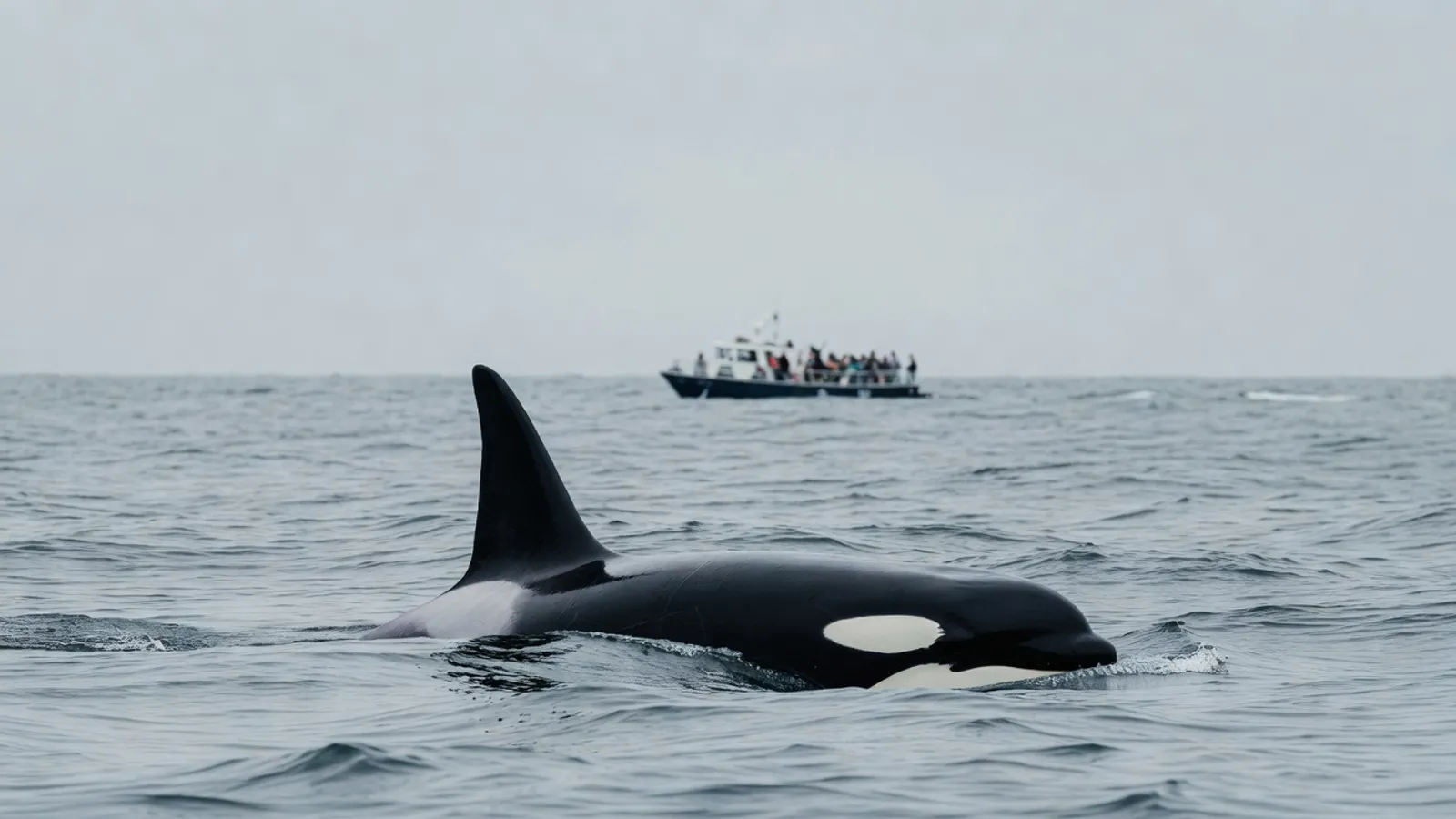
Most whale watching tours last about 2–4 hours, though they range from roughly 1.5 hours for a quick harbour cruise up to full-day and even multi-day expeditions — depending on where you go, how far offshore the whales are, and what sea conditions allow.
The length of any given tour is driven by a handful of variables: the distance from port to the feeding or breeding grounds, the tour type and vessel speed, the season, and ultimately the captain's judgment on the day. Here's how to read a listing before you book.
Typical Duration at a Glance
Most operators fall into one of four categories. Match your time budget and tolerance for open water before you browse.
| Tour type | Typical length | Best for |
|---|---|---|
| Quick / harbour / express cruise | ~1.5–2 hours | Families, first-timers, seasickness-prone travellers |
| Standard half-day tour | ~2.5–4 hours | Most travellers — the most common format worldwide |
| Full-day tour | ~5–8 hours | Photographers, offshore species, serious wildlife watchers |
| Multi-day expedition (e.g. Baja, offshore) | 2+ days | Dedicated cetacean researchers and enthusiasts |
How Long Is a Whale Watching Tour by Destination?
Distance from port to the whales is the single biggest driver of how long a tour runs. The further offshore the feeding or breeding grounds, the longer the transit — and the longer the trip. Here's how the major regions compare.
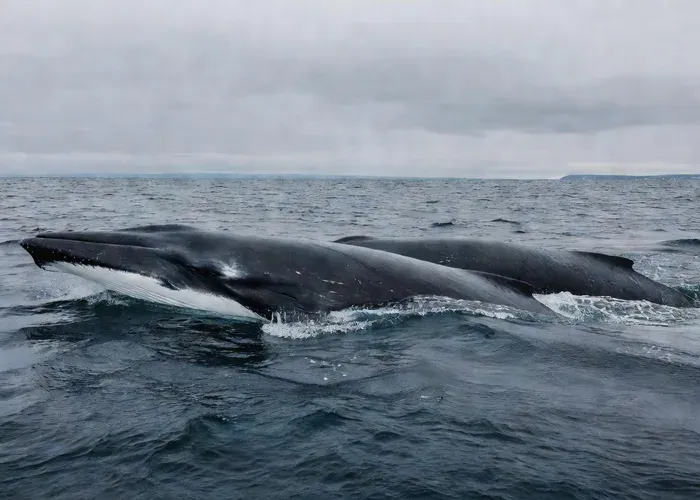
| Destination / region | Typical length | Why |
|---|---|---|
| Dana Point / San Diego / Los Angeles | ~2–3 hours | Gray, blue, and fin whales migrate close to shore along the California coast — transit is short |
| Maui / Oahu | ~1.5–3 hours | Humpbacks winter in shallow Hawaiian waters — whales are often within 1–2 miles of the harbour |
| Depoe Bay / Bodega Bay | ~2–3 hours | Gray whales migrate close to the Oregon and Northern California coast; Depoe Bay is the self-styled "whale-watching capital of the Oregon coast" |
| Cape Cod / Boston / Bar Harbor | ~3.5–4 hours | Stellwagen Bank sits ~25 miles offshore — transit adds 45–60 min each way; rich feeding ground worth the journey |
| Seattle / San Juan Islands | ~4–5 hours | Orca pods roam the broader Salish Sea and Strait of Juan de Fuca — boats sometimes travel 30+ miles to intercept them |
| Húsavík / Reykjavík | ~2–3.5 hours | Highly variable: Skjálfandi Bay in Húsavík is compact and productive; Reykjavík tours cross Faxaflói Bay in changeable North Atlantic conditions |
| Tromsø / Andenes | ~2–4 hours | Orca and sperm whales follow herring into the fjords in winter; Andenes tours sometimes travel further for sperm whales offshore |
| Azores | ~3–4 hours | Year-round cetacean hotspot in the mid-Atlantic; spotters in old shore-based lookout towers (vigia) radio boats toward animals to minimise search time |
What Affects How Long a Tour Lasts?
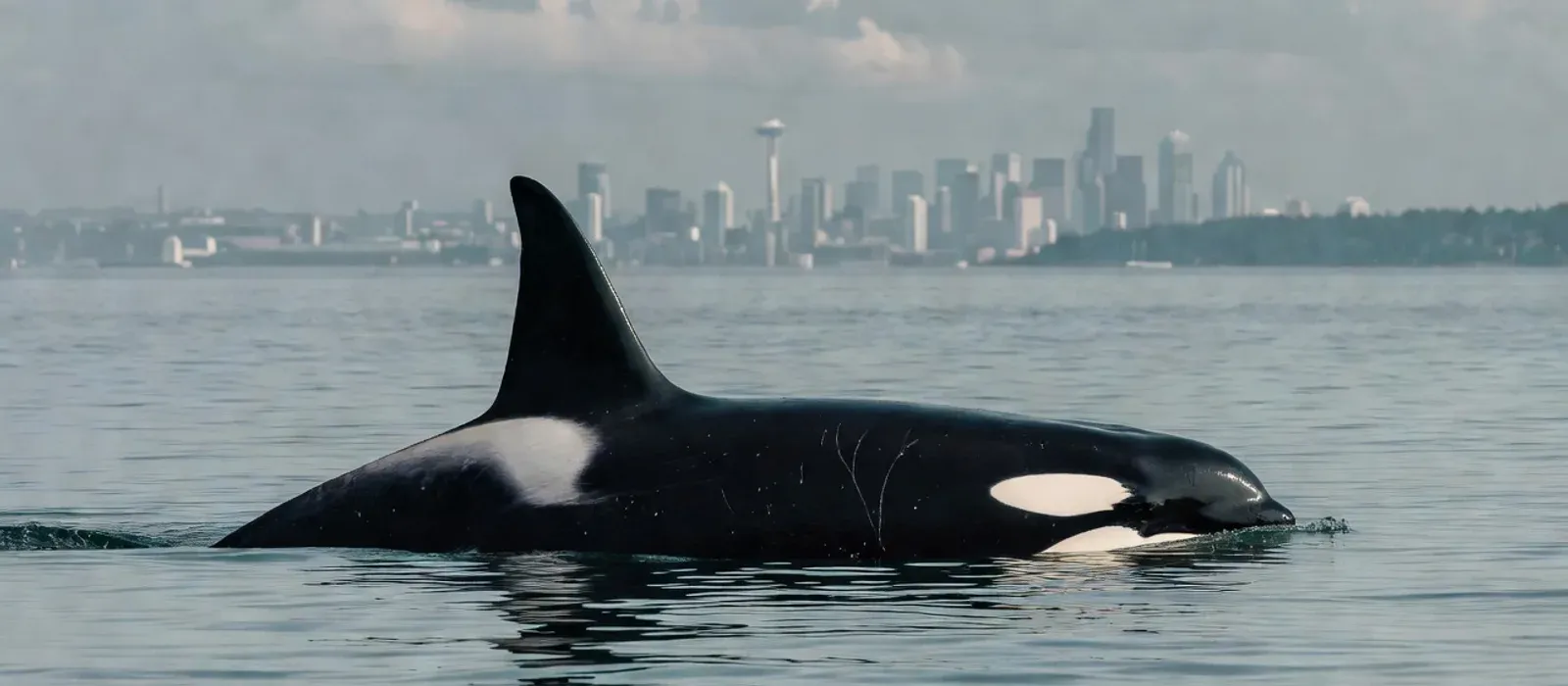
- Distance to the whales — the dominant factor. Whales close to shore (California, Hawaii) mean short transits; offshore feeding banks (New England, Pacific Northwest) add 45–90 minutes each way.
- Season and migration patterns — during peak season, whales are predictably in known feeding areas. In shoulder months, animals can be further afield and search time increases.
- Boat type and speed — rigid inflatable boats (RIBs) and high-speed catamarans reach the grounds faster than traditional sailing vessels or slower displacement hulls. A RIB may cover the same distance 30–40% quicker.
- Weather and sea conditions — rough conditions both slow the vessel and trigger early returns. Calm days allow operators to run the full scheduled length or extend when whales are active.
- Captain's discretion — tours can run over if whales are distant but behaviorally active, and can be cut short if conditions deteriorate. A reputable operator communicates this before departure.
- Private charters — duration is negotiated at booking, not fixed by a schedule. Most operators offer 2, 3, 4 or 6-hour slots; some extend by the hour on request.
How Much of That Time Is Actually With the Whales?
A 3-hour tour does not mean 3 hours watching whales. On a typical shared tour, transit to the feeding grounds accounts for 30–60 minutes each way, leaving 60–120 minutes in the observation area. Within that window, actual close encounters — a breach, a surface pass, an extended feeding sequence — can last anywhere from a few seconds to 20 minutes.
This is not a criticism of the format; it is the honest reality of pelagic wildlife. The transit is part of the experience — naturalist commentary runs throughout, dolphins often appear en route, and the open-ocean approach builds anticipation that a zoo exhibit cannot replicate. The key point: a 2-hour tour and a 4-hour tour both typically spend a similar proportion of time with the whales — the longer trip just has more transit, more scanning, and usually greater species diversity.
Which Tour Length Should You Choose?
Choose a shorter tour (1.5–2.5 hours) if you're travelling with young children, are prone to seasickness, or are tight on time. Hawaii and Southern California destinations are ideal — the whales are close and even brief tours produce reliable sightings. Take seasickness medication the night before regardless of trip length, and check our full guide on what to wear and what to bring for any boat trip.
Choose a standard half-day tour (3–4 hours) if this is your first whale watching experience and you want a meaningful sighting window without committing to a full day. This is the most common format worldwide and hits the best balance of depth and accessibility.
Choose a full-day or multi-day tour if you are a wildlife photographer, a dedicated cetacean enthusiast, or specifically targeting offshore species — sperm whales, deep-water beaked whales, or multiple species in one trip. The Pacific Northwest, Azores, and Andenes are the standout destinations for this.
Browse all whale watching destinations by region to compare tour lengths, prices, and season at a glance — every listing shows real operator durations, not estimates.
Frequently Asked Questions
How long is a whale watching trip on average?
⌄What's the difference between a half-day and full-day whale watching tour?
⌄Can a whale watching tour be extended or cut short?
⌄Are shorter whale watching tours better for kids or seasickness?
⌄Do private whale watching charters have a fixed length?
⌄The bottom line: budget 2–4 hours for a typical whale watching tour, and check the specific listing before you book — the duration on the page reflects the actual operator's scheduled trip, not an estimate. Browse all whale watching destinations worldwide to find the right length, season, and species for your trip — with free cancellation on every booking.